In Nature and in real life, unlike in standardised critical reasoning exams and in most
human minds, events, occurrences and accidents are multicausal. The human affection with simple models of causality is something to be kept in mind while analysing events and thinking of (and acting on) solutions. For example, for most modern Ambedkarites the casteism of Brahmins is the only cause of Indian problems and for most upper-caste supremacists the only problem stopping India from becoming a superpower is reservation. In the next paragraphs of this essay, I will be as objective and realistic as possible even though human nature makes it hard because of its affection and biases toward certain issues, topics and ideas.
The topic title seems very apt as it contains the word opportunity. I feel that the Ram
Mandir inauguration is not just an event of celebration but also an opportunity to introspect and realise the causes of the Ram Mandir’s destruction and the destruction of not just Hindu temples but also that of the Hindu religion from a vast landmass of the Indian subcontinent. Apart from that we also need to see what we did right that paved the path of temple construction and what we can do to enhance those practices. I see this introspection as our Dharmic duty as the Dharma by definition “sustains”. And it is the Hindu religion that we need to sustain to protect this and many other temples from being torn down again.
I am writing a few important points from the non-exhaustive list, which come to my mind whenever I communicate or interact with Hindus, in person, as a group and as a society, points which are very important for introspection as well as a positive feedback loop of good traits.
THE RELIGIOSITY – Even attributes such as love for temple architecture, (Just the) knowledge of the whole Hindu philosophic universe, being proud of our culture and the dislike for other religions can not replace the faith or shraddha for our Devas and Bhagvaan. Faith is the soul of the religion. It is a positive and comforting thought it can never be replaced by pride or hate. After reading Dr Meenakshi Jain, I concluded that Shardhha and Bhakti have saved the religion in the most hard times and that these are necessary conditions for the survival and growth of the Hindu religion. Elders and knowledgeable persons must sit and discuss the future implementable course of action to propagate the faith because whatever we are doing right now is insufficient and is resulting in a deracinated unfaithful breed of youngsters.
THE NOTION OF INDESTRUCTIBILITY OF HINDU DHARMA AND THE ROLE OF SOCIAL
INSTITUTIONS – I have seen many Gurus and a lot of Hindus saying that Hindu dharma is indestructible and can’t be wiped out and hence, they imply, we need not worry about it. Obviously, it is a wrong and dangerous notion. My further conversations with many such people made me realise the root cause of this wishful thinking: the confusion between Dharma and religion and the status of Hindu dharma in it. We need to clearly understand that Hinduism is a religion (Apart from being many other things) and it is made by our ancestors over a large timespan. Hindu Religion is the vehicle of many Sanatana (eternal) principles of life and that of codes (dharma) that nourishes the society but this notion does not mean that the world would come to an end without the Hindu religion. Even without a single Hindu in this world the law of karmaphala will apply and aatman will take rebirth; the eternal principals will be followed by cosmos. Is such a condition okay with us or with the people that I mentioned? NO. A big NO.
Hindu religion is also a social product/culture because it is created and shared by groups of people. Without the Hindu people, there is no meaning of scholarly talks of eternal principles and dharma that drives the whole universe and cosmos. And that’s where the role of religious institutions comes into the picture; religious institutions must play a role or help in causes such as education, health, probably insurance, helping financially, charity, helping gain social respect etc, things making human life more purposeful, productive and meaningful. A lot of brainstorming can be done over this idea and implementation of this idea on the ground. Such Aid will help Hindu institutions help an average person in ways other than solving the Adhyatmic curiosity for cosmic truth, a truth most people don’t realise for a long long time or even until death. These are secular elements of religion, requiring professionalism and technology, such as management of temples, schools, hospitals, financial management of social institutions and thinktanks, media etc.
STAKEHOLDERSHIP AND ELIGIBILITY – It is a much-discussed and debated topic among our circles. The idea that every Hindu must feel and must be felt a stackholder and eligible for positions and responsibilities in the social and religious structure is very simple yet very revolutionary. Its implementation will automatically make Hindus multitimes powerful, culturally and politically. The Ram Mandir Andolan is a small example of it, where a strong number of people of many castes considered themselves stakeholders of the Hindu religion; and this phenomenon helped us reach this stage. This is one of those ideas without which the Hindu Renaissance can’t be completed and the religion will die a painful death and probably no one will spend a tear in such a case. I will not quote any scriptures as it doesn’t matter what Puranas or Dharmashastras say in this matter as respect in society, for most of us, comes much before any aadhyatmic curiosity for the ultimate truth in the hierarchy of needs; there are no ifs and buts. Talking about the same hierarchy of needs, I also want to point out that with our country coming out of poverty and with their most basic needs getting fulfilled the need to feel equality will become stronger and stronger.
HUMAN RESOURCES – Just as a successful employee must have at least a minimum
knowledge of his/her job a Hindu should understand the basics of dharma, its morality, its brief history and awareness of areas where further knowledge or clarification is needed. Family, schools and local temples must play a role at the local level, and because in complex philosophic matters teaching method is as important as teaching content, religious philosophers and educationalists must design the content at a higher level.
Hindu religion, or any religion for that matter, is its scriptures, its legacy and its people.
We must have a population of physically and mentally healthy individuals as they are the workforce and physical manifestation of religion, and that is where sports, education, logical thinking and the financial well-being of its population come into the picture.
As an enthusiast of Architecture and design, I feel working and improving on human
resources will solve the current widespread problem of our bad aesthetic sense and unfortunate treatment of our legacy.
THE POLITICAL POWER – Another necessary condition, as in times of competitive and hostile Abrahamic religions it is very hard to keep Hindus safe without political power. In democracy having a Hindu political party is an option but the better option is to make the population Hindu (most of it is only Hindu by name). Successful Ram Mandir Andolan is a good example of how and what we can achieve with political power. A lot has been said about this point in our groups, so I won’t explain it further.
GOALS – The Hindu religion gives four goals to our life, Dharma, Artha, Kaama and Moksha, clearly very non-reactionary and absolute goals, not related to any personality, period or
geographic location.
Unfortunately, most or probably all goals of contemporary Hinduvadis are reactionary something not very eternal (Sanatan). The movement driven by just temporary goals such as winning a particular election or goals linked with other communities or geography is destined to be mentally detached from its followers eventually. I am not saying that short-term goals and goals with a non-universal outlook are bad; actually, they are very important and play a critical role in any movement, but the movement leadership and public at large must have an idea about the larger goal, which, by definition, can’t be geography bound, other community and race bound, and time-bound. These bigger goals can be service of humanity, Spreading eternal principles of Vedanta, Saving world from fanaticism etc.
This principle is also important how we articulate ourselveslves; it defines the mental
orientation and further functions towards it. For example – It’s a better goal to “promote Jhatka meat” than to “boycott Halal”; “let’s build Ram Mandir in Janmasthaan” is more powerful than “let’s destroy Babri structure”; “Let’s make all Hindus more aware and dharmic and treat them equally” is much more timeless than “stop Christian conversion” or “stop Islamic conversion”; “Khajuraho is beautiful” is better than “Khajuraho is better than Tajmahal”. Here we need to understand that If we are “reaction”ary, we will always be behind “actions”. I feel reactionary goals also show how underconfident, dependent and unoriginal the person/ movement is.
The list can go on and there are many more points which can be added, and many opinions can be different from these views. However, we must move beyond debates and come forward with actionable points to implement at different levels, from gated townships to district and even world level.
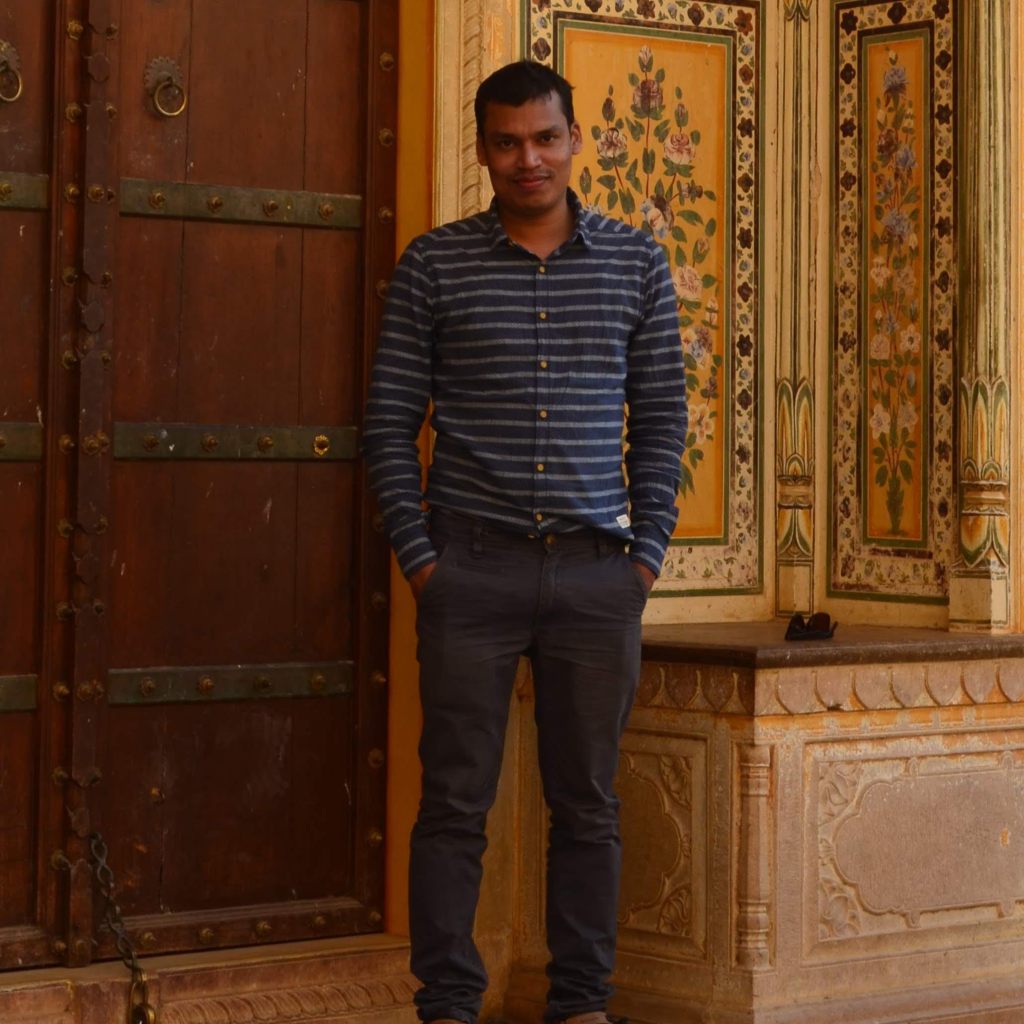
Anant Sonwane is a Mechanical Engineer by training and currently working as scientific officer. He has been a Swayamsevak since his school days. He is interested in Religion and Anthropology. Having lived in different parts of the country over the years, he feels, he has developed an understanding of various thought processes of people hailing from different parts and background.
 APASMARA